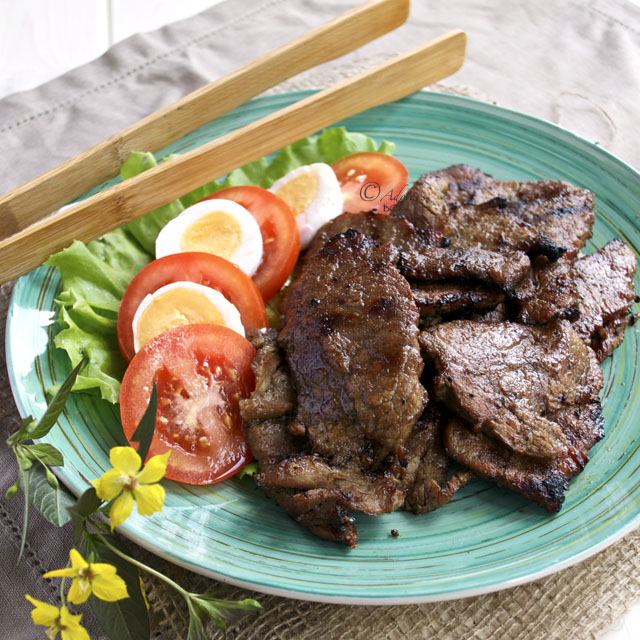
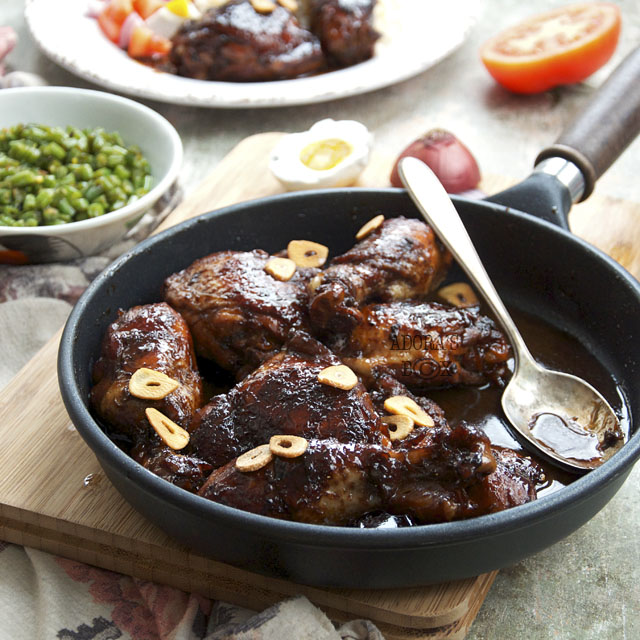
Say Filipino food and the word adobo comes to mind. It is the most known Filipino dish and to some, the only one they know.
Showing posts with label Braise. Show all posts
Thursday, 19 March 2015
CHICKEN ADOBO (ADOBONG MANOK)
Say Filipino food and the word adobo comes to mind. It is the most known Filipino dish and to some, the only one they know.
Filipino, Asian, Oriental food, food photos
Asian,
Braise,
Chicken,
dinner,
Filipino recipe,
gluten free,
Quick and easy,
Stew
Wednesday, 21 January 2015
BEEF MORCON
As Christmas approaches, one can't help but feel nostalgic. Though some seek to inject new ideas into their Christmas celebrations, many still yearn for their Christmas past. I for one yearn for the lovely Christmases I had when I was growing up. The wonderful food, the family togetherness and the presents are part of the warm memories I'll always treasure. I also miss not being the one to orchestrate the Christmas preparations.
Filipino, Asian, Oriental food, food photos
Beef,
Braise,
Christmas,
dinner,
Entertaining,
Filipino recipe,
Pork,
vegetables
Sunday, 28 September 2014
CHICKEN AFRITADA
The question of why Philippine cuisine is not as popular as the other Southeast Asian cuisines still remain. There are funny, sometimes insulting answers. I choose not like to delve deep into the matter but I have a few ideas of my own.
Filipino, Asian, Oriental food, food photos
Braise,
Chicken,
dinner,
Entertaining,
Filipino recipe,
Main dish,
Spanish,
Stew,
vegetables
Sunday, 10 March 2013
BEEF IN GUINNESS
St. Patrick's Day must be the most fun saint's feast day that I know. The celebration is so global that everywhere in the world joins in the merrymaking. A good amount of Irish grub and tipple is consumed on this day.
Filipino, Asian, Oriental food, food photos
Beef,
Braise,
dinner,
English,
Entertaining,
Irish,
Main dish,
Stew,
vegetables
Monday, 23 July 2012
PATA TIM
Awareness of the art of cooking has been revived, thanks to cooking shows and food websites (such as food blogs). More people are interested in learning about food and different recipes. If they do not actually cook, they at least appreciate the looks, the story and the recipes that's behind every dish.
Filipino, Asian, Oriental food, food photos
Braise,
Chinese,
Chinese New Year,
Filipino recipe,
Pork,
Stew
Thursday, 21 June 2012
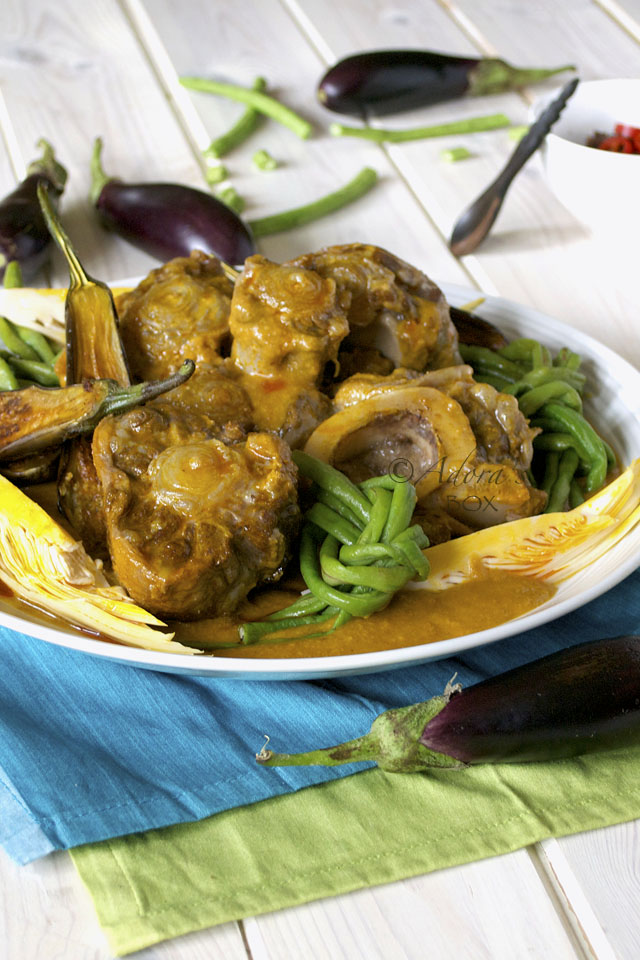
KARI KARI (FILIPINO OXTAIL STEW)
As a Filipino, I naturally love Filipino food. It is the food my tastebuds have been honed on. Although it is one of the lesser known Asian cuisine, those who have tasted it, rave about it. Not much herbs and spices are used but the flavour comes from the natural taste of the best ingredients. A lot of our food are simple and probably doesn't have an edge in terms of presentation. I think for our food to have a wider multicultural fan base, we have to present them in a way which is more universally appealing.
Our Kulinarya Cooking Club theme for this month of June, courtesy of our gracious hosts Tina of Pinay in Texas Cooking Corner and Cherrie of Sweet Cherrie Pie is native Filipino cuisine. A recent revival of Filipino heritage dishes has brought to the fore old recipes that through the years have been eclipsed by modern and foreign cuisine. Although a lot of Filipino dishes has Spanish or Chinese influence, there are also a lot of indigenous Filipino dishes that truly originated from the Philippines.
Kari kari, also called kare kare, is one of the all time favourite native dishes. It is a stew, usually made with oxtail or tripe or a variety of meat cuts (I used oxtail and shin of beef with marrow bone), with a rich peanut gravy that derives its characteristic yellow color from annatto seeds. Ground fried or roasted peanuts and ground toasted rice grains provide richness to the sauce. Although modern cooks use peanut butter, ground peanuts is the traditional and correct ingredient for making the traditional recipe. Kari kari is not complete if not served with a side dish of ginisang bagoong (sauteed shrimp paste).
Kari kari apparently originates from the Southern part of the Philippines. It was brought to Manila by the Moros (the Southern natives) where it was embraced as a national dish. The flavour is very characteristically Malay, owing to the Southern tip of the Philippines' proximity to the other Southeast Asian countries. Although there has been mention of the name being derived from the word curry, I think the more logical explanation is that the Malay term for dishes with sauce is kari which simply means sauce.
I have interpreted this dish in a way that can be better appreciated by Filipinos and non-Filipinos alike. It is one of those Filipino stews that becomes uniform in colour when cooked. Filipinos say that our food is unappealing because it is usually brown. In this case, it is yellow. I have cooked the vegetables separately and just added them to the dish in the end. This way, the sauce remains pure and rich, undiluted by the juices of the vegetables. The vegetables have retained their original colour too because they were not cooked in the yellow sauce.
Ingredients:
1 1/2 kg. oxtail and shin of beef meat
3 large onions, sliced
cooking oil
3 tbsps. of annato (achuete) oil
1 1/2 tbsps. crushed garlic
1/4 c. ginisang bagoong (sauteed shrimp paste)
3 tbsps. toasted store bought ground rice
2/3 c. ground fried or roasted peanuts
8 snake beans (sitaw)
6 eggplants or 10 baby eggplants
1 fresh banana heart, split into 6 wedges and soaked in salted water (or use tinned cooked banana heart like I did here)
ginisang bagoong to serve
Method:
Cut the shin meat into big chunks, similar to the size of the oxtail pieces.
Pan fry all the meat pieces, a few pieces at a time in the cooking oil until well browned all over.
Transfer the browned meat and 1/3 of the onion slices into a big pot and cover with water.
Bring to a boil and simmer until tender (about 2 hours). This can also be done in a pressure cooker for 20 minutes.
Take the meat out of the stock and set aside. Strain the stock and skim off the fat from the surface.
![]() |
| Toasted rice and ground peanuts. |
Add the onions and sauté until very soft. Add the peanuts and bagoong and stir for about 2 minutes.
Add 5 cups of the stock and bring to a boil.
Add the ground rice. Bring to a boil and simmer for 3 minutes.
At this stage, I pureed the sauce with a hand blender because I like my sauce smooth.
Return the meat to the sauce and simmer on low heat for 10 minutes.
![]() |
| Store bought ginisang bagoong. |
Boil the snake beans and banana heart separately.
Add the vegetables to the kari kari and simmer for 3 minutes. Serve with ginisang bagoong.
Heat up 1/2 cup of cooking oil. When hot add 2 tbsps. of annato (achuete) seeds. Take off the heat and leave to steep and cool. Strain the seeds off. Use the oil in recipes.
See the other posts for this month's theme:
Palitaw from Day of Chef by Day
Avocado Shake from Malou of Skip To Malou
Pinais na Isda from Iska of Iskandals.com
Grilled Panga ng Lapu-Lapu from Erwin of Iskandals.com
Tapsilog from Cherrie of Sweet Cherrie Pie
Kulawong Talong from Elizabeth of Asian In America
Kalamay na Pinipig from Jun of Jun-blog
Kutsinta from Tina of Pinay in Texas Cooking Corner
Please support Adora's Box by making your Amazon.com and mymemories.com (use the code STMMMS55174) purchases from this site. Click on their respective banners to proceed to their websites. It will not cost you a single cent more but will help sustain this blog. Thank you.
You might also like
![]() |
| Sweet and Spicy Beef Tapa |
![]() |
Lechon Manok (Filipino Roast Chicken)
![]() |
| Pork Menudo |
Filipino, Asian, Oriental food, food photos
Beef,
Braise,
dinner,
Entertaining,
Filipino recipe,
gluten free,
Kulinarya Cooking Club,
Stew
Monday, 28 May 2012
BEEF STEW WITH HERBED POTATO DUMPLINGS
When it comes to comfort food, beef stew is sure to get a mention. It is not only the taste that gives comfort, it is also the aroma that fills the house as it cooks that makes everyone look forward to actually eating it.
Filipino, Asian, Oriental food, food photos
Beef,
Braise,
dinner,
Entertaining,
Stew
Monday, 9 January 2012
BRAISED LAMB SHANKS WITH OLIVES AND LEMON
We've had a spate of freaky, super blustery weather last week after having an unusually mild start to the winter. Apart from the weather being worrying and disturbing, it wreaked havoc on tv aerials and satellite dishes.
Filipino, Asian, Oriental food, food photos
Braise,
gluten free,
Lamb,
Stew
Tuesday, 15 November 2011
BEEF GOULASH
Memories of summer is now in the distant past. The air is once again cold and damp. The trees are leafless and the ground full of fallen leaves waiting to be cleared. Our barbecuing days are over, at least for now. Warming stews and soups are what's best to eat at this time of year.
Filipino, Asian, Oriental food, food photos
Beef,
Braise,
Entertaining,
Stew
Friday, 14 October 2011
CHICKEN CACCIATORE
We are well and truly into autumn. Food that warms both body and heart are what we should now cook. Isn't it just nice to smell the aroma of delicious food as it slowly cooks? The anticipation mounts and is instantly gratified when the food is finally served.
Tuesday, 30 August 2011
BISTEK TAGALOG
Filipino, Asian, Oriental food, food photos
Asian,
Beef,
Braise,
Filipino recipe,
gluten free,
Stew
Tuesday, 21 June 2011
TAHITIAN PORK (PORK WITH STAR ANISE AND PINEAPPLE)
The name of this recipe conjures images of swaying palm fronds and sashaying lasses. The flavour is a tantalizing mix of Asian and fresh tropical flavours. One taste and you will approve of the name it was aptly given.
Saturday, 11 June 2011
CHICKEN ALA JAO (CHICKEN ADOBO IN LIVER SAUCE)
This dish, although not one of the town's classic fares, was invented in Marikina. It was the innovation of a couple named Henry and Naty Jao who were poultry retailers at the town market. The chicken is mildly flavoured with adobo seasonings then is sautéed with chopped onions and ground chicken liver.
Filipino, Asian, Oriental food, food photos
Asian,
Braise,
Chicken,
Christmas,
Filipino recipe
Saturday, 26 February 2011
ASADO CON LECHE
Filipino, Asian, Oriental food, food photos
Asian,
Braise,
Entertaining,
Filipino recipe,
Oriental,
Pork
Thursday, 30 December 2010
PORK HAMONADO
Pork hamonado is one of the classic Filipino dishes served at celebrations. It is ever present on the menu, the same way as ham is featured at Western celebrations. It is a dish of rolled up cured pork (tocino) slices "cooked like ham" (hamonado) in pineapple juice spiked with aromatic spices and sweetened with brown sugar.
I used a curing mix for this because the cured pork (called tocino) is not available here. Thick gammon or uncooked ham slices may be cooked this way as well.
The cooked pork rolls are sliced before serving and drizzled with the sauce. It is favoured as a party dish because it presents well and has the popular sweet and sour taste. Unlike ham, it is served with steamed rice.
1 kg. of pork shoulder meat, sliced into large, thin slices
1 packet of McCormick Tocino mix
1/2 c. sugar
1 1/2 c. pineapple juice
3 segments star anise
1 stick of cinnamon
1/4 c. brandy
About 3 tbsps. honey
Instructions:
Mix the tocino mix with 1/2 c. of water and use as marinade for the pork slices. Leave to cure overnight. The same quantity of ready made tocino (cured pork) may be used instead of the pork. You can also make pork tocino using this recipe.
Pre-heat the oven to 350° F/180° C.
Take the pork slices out of the curing liquid. Roll the pork slices tightly like a jelly roll and tie with string.
Caramelize the sugar in a dry pan.
When the sugar is all melted and browned, add the pork rolls. Turn rolls around to sear and brown in the caramel.
Add the rest of the ingredients and bring to a boil. Stir the sauce to melt the sugar. Transfer to a baking dish and cover tightly with foil.
Bake for about 1 hour and ten minutes or until fork tender. Brush with honey and let rest before slicing.
Serve with the sauce.
All rights reserved ©Adora's Box Copyright 2011.
Please support Adora's Box by making your Amazon.com and mymemories.com (use the code STMMMS55174) purchases from this site. Click on their respective banners to proceed to their websites. It will not cost you a single cent more but will help sustain this blog. Thank you.
You might also like
![]() |
| Fely's Estofado |
![]() |
| Filipino Pork Stew with Sweet Pickles (Waknatoy) |
![]() |
| Piña Cola Ham |
Filipino, Asian, Oriental food, food photos
Asian,
Braise,
Christmas,
Entertaining,
Filipino recipe,
Pork
Friday, 24 December 2010
FELY'S ESTOFADO
I miss Philippine Christmases. It is one of the longest Christmas seasons in the world. Celebrations usually start way before December, even preceding Halloween.
Filipino, Asian, Oriental food, food photos
Asian,
Beef,
Braise,
Christmas,
Entertaining,
Filipino recipe,
Stew
Tuesday, 21 December 2010
CIDER AND CHESTNUT CHICKEN
There's only a few ingredients and the process is very simple yet the taste would far exceed your expectations. It is a recipe well worth trying. This could easily become a new family favourite.
1 whole chicken
2 tsps. celery salt
1/4 c. flour
1/4 c. butter
3 cloves garlic, minced
1 onion chopped
2 tsps. celery salt
4 rashers of unsmoked streaky bacon, chopped
1 tsp. fresh thyme
2 c. pear or apple cider
20 whole cooked and peeled chestnuts
1 tbsp. brown sugar
1 tsp. salt
1 tsp. pepper
Method:
Preheat the oven to 350° F/180° C.
Cut the chicken into quarters. Dredge lightly in the flour seasoned with the celery salt. Save the leftover flour for later.
Pan fry in 2 tbsps. of butter (or substitute) mixed with 2 tbsps. of oil until browned. Transfer to an oven proof dish and set aside.
In a clen pan, saute the garlic in the rest of the butter for 2 minutes. Add the chopped onion and saute until soft and translucent. Add the chopped bacon and saute until cooked.
Add one tablespoon of the leftover seasoned flour to the pan and stir. Slowly add the cider while stirring. Add the rest of the ingredients and bring to a boil. Pour over the pan fried chicken . Cover the dish with foil and bake in the oven for 50 minutes or until the chicken is cooked and tender.
I served this with boiled potatoes but roast or mashed potatoes would be equally good.
Please support Adora's Box by making your Amazon.com and mymemories.com (use the code STMMMS55174) purchases from this site. Click on their respective banners to proceed to their websites. It will not cost you a single cent more but will help sustain this blog. Thank you.
![]() |
| Caramelized Onion and Mustard Chicken |
![]() |
| Salt Baked Chicken (Pinaupong Manok) |
![]() |
| Chicken Cacciatore |
Filipino, Asian, Oriental food, food photos
Braise,
Chicken,
Entertaining
Thursday, 11 November 2010
RED BRAISED BEEF (BEEF PARES)
A very classic Chinese style of stewing meat is braising in a sauce flavoured with aromatics such as star anise, garlic and ginger. Soy sauce and wine is added to the liquid, which makes the cooked meat reddish in colour. Some restaurants have their prized "vintage" sauce in which they braise their meats over and over again, making the sauce rich and concentrated in flavour. The same braising method can also be used for lamb, pork or duck. Red braised beef may be eaten with rice, or noodles in soup.
Subscribe to:
Posts (Atom)